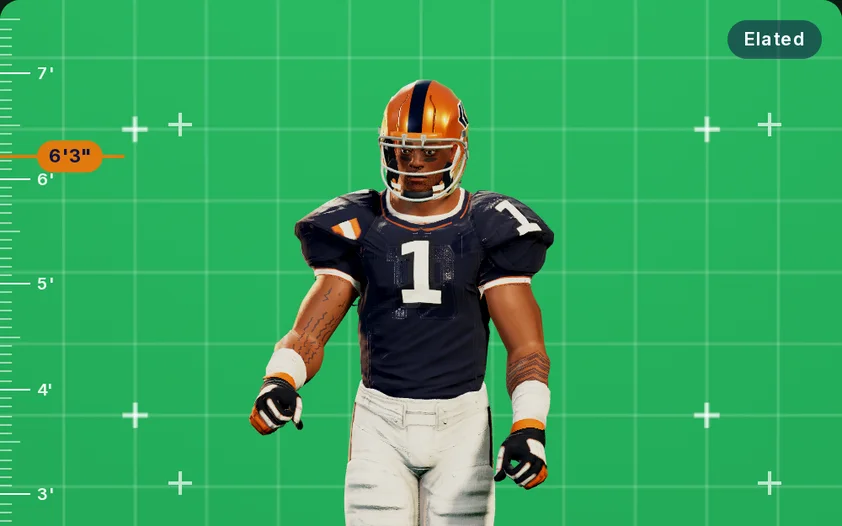
Player card
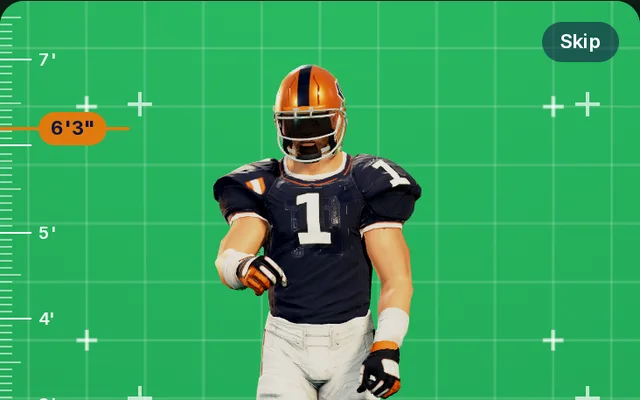
Each player in 3D: his kit, his height and his celebrations.

ALL-22
Tactical Football Simulator
Build a roster, prepare a game plan and call the plays in a full 3D football simulation that runs in your browser.
A pro football game. You're the head coach.
Draft the roster, plan the week, call the plays, and watch twenty-two men carry them out.
Call the play
The game engine below is running live in your browser. Read the coverage, choose a play from the playbook and snap the ball. All 22 players react independently, with each outcome decided by a physics model of speed, leverage and contact.
Build a playbook in the Play Lab →See the coaching concepts →Game day
Call the plays from the sideline, or delegate play-calling and watch the game unfold. Your coordinators recommend a call and explain their reasoning, and the final decision is yours before the play clock runs down. You can also audible at the line when the defense shifts.
See game day →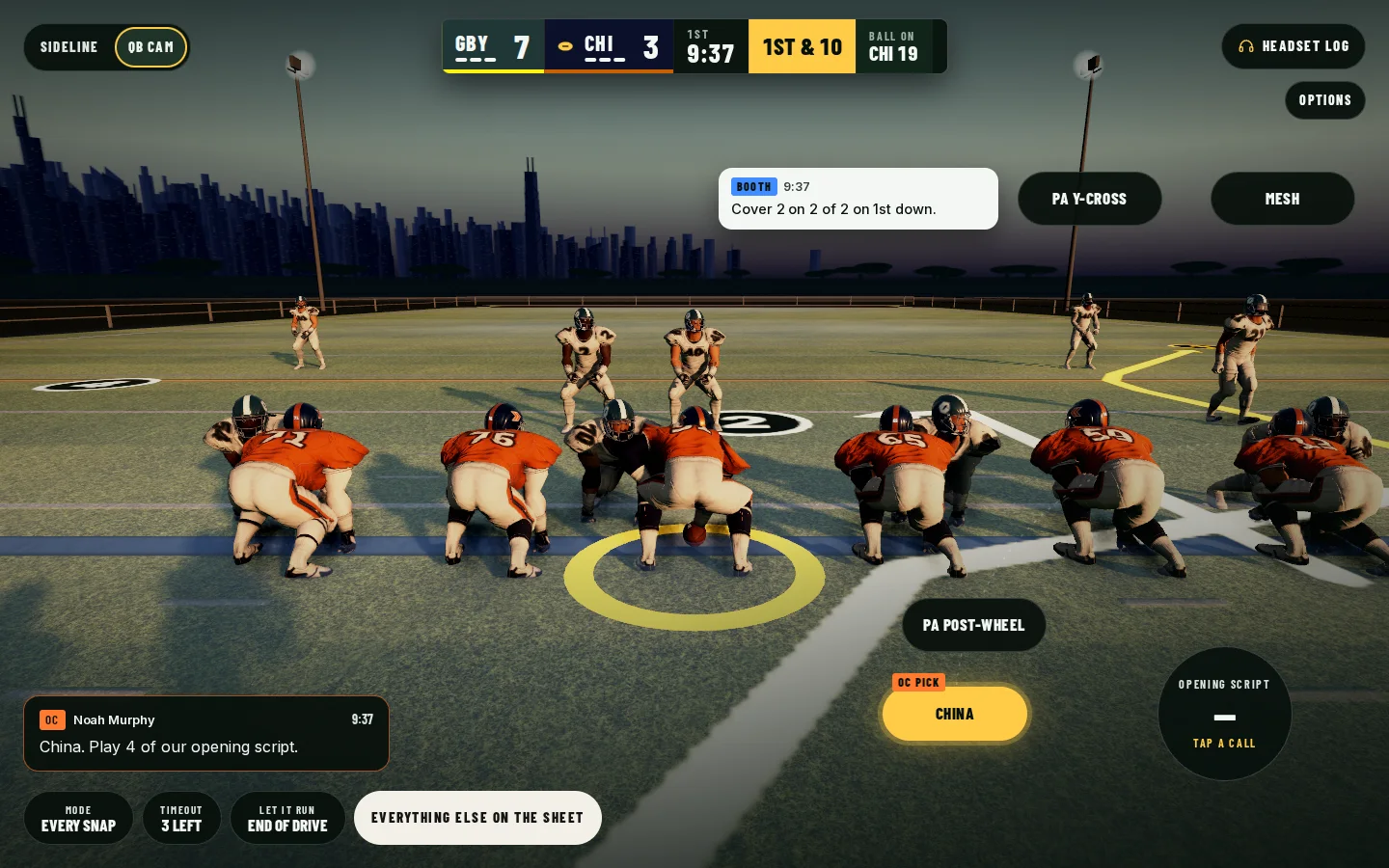
Game week
Each week moves through seven stages between games, from film review to halftime adjustments.
ALL-22
Tactical Football Simulator
Build a roster, prepare a game plan and call the plays in a full 3D football simulation that runs in your browser.
A pro football game. You're the head coach.
Draft the roster, plan the week, call the plays, and watch twenty-two men carry them out.
Call the play
The game engine below is running live in your browser. Read the coverage, choose a play from the playbook and snap the ball. All 22 players react independently, with each outcome decided by a physics model of speed, leverage and contact.
 Loading the gameThe field, the players, the physics.0%

Swipe for more plays →
Game day
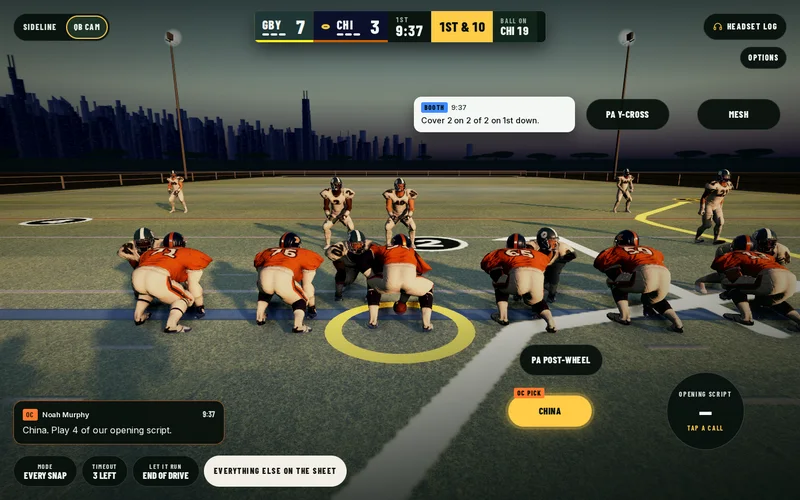
Call the plays from the sideline, or delegate play-calling and watch the game unfold. Your coordinators recommend a call and explain their reasoning, and the final decision is yours before the play clock runs down. You can also audible at the line when the defense shifts.
Game week
Each week moves through seven stages between games, from film review to halftime adjustments.
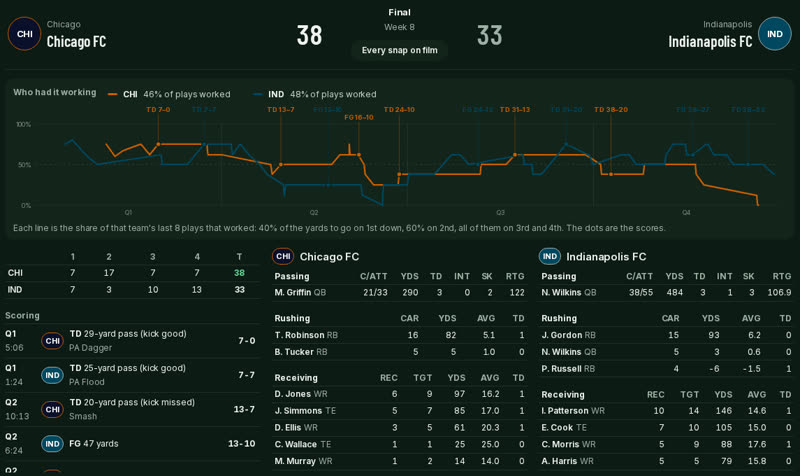
Each block, throw and tackle is resolved by a physics model that accounts for player size, speed, momentum and weather conditions.
See the Play Lab →Each player has a height, weight and 40-yard dash time, and moves on the field at that speed.
Mass and velocity decide each collision, from one-on-one blocks to multi-player piles.
Each tackle is simulated as a collision. The angle and force of contact produce wraps, big hits, drag-downs or ankle tackles, and can force fumbles.
Linemen win each rep with individual moves, including punches, swims, rips, long arms and anchors, to create or stop pressure.
Throws lead the receiver and are affected by wind. Tipped passes stay live, and loose balls bounce the way a football does.
Higher-rated quarterbacks read more of the field. Safeties react to the quarterback's eyes and can be moved with a look-off.
Sprinting drains stamina over the course of a drive. A hurry-up offense can wear a defense down.
Wind, rain, snow, playing surface, altitude and crowd noise all affect how a game plays.
Momentum is mass multiplied by velocity. Bigger, faster players are harder to stop.
Impact force depends on both players' mass and their closing speed.
Momentum is conserved through contact, which determines whether a runner falls forward or is stopped.
Each player accelerates toward his own top speed at his own rate.
Air resistance slows the ball, so deep passes hang and wind alters their path.
Passes, punts and kicks rise and fall on a true arc, from the release to the hands.
Franchise mode
Scout and draft prospects, manage the salary cap, negotiate contracts and trade with AI general managers who each have their own priorities.
Each player in 3D: his kit, his height and his celebrations.
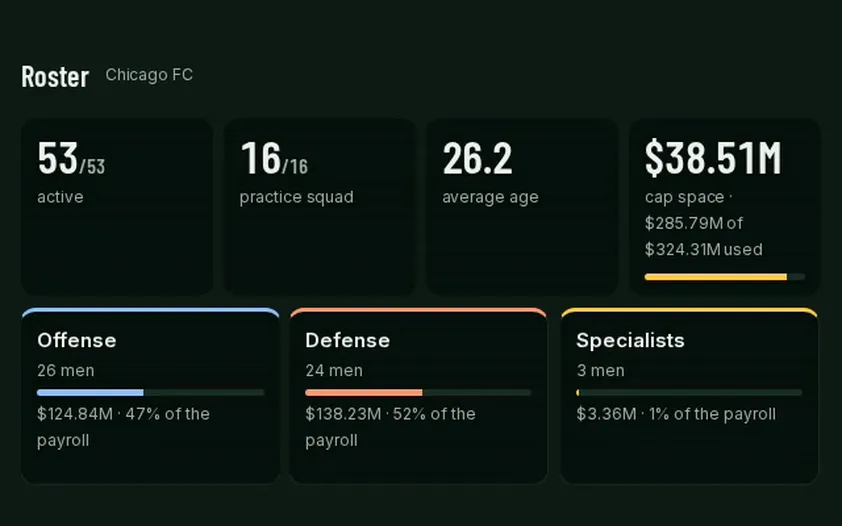
Set your starters and backups at each position.
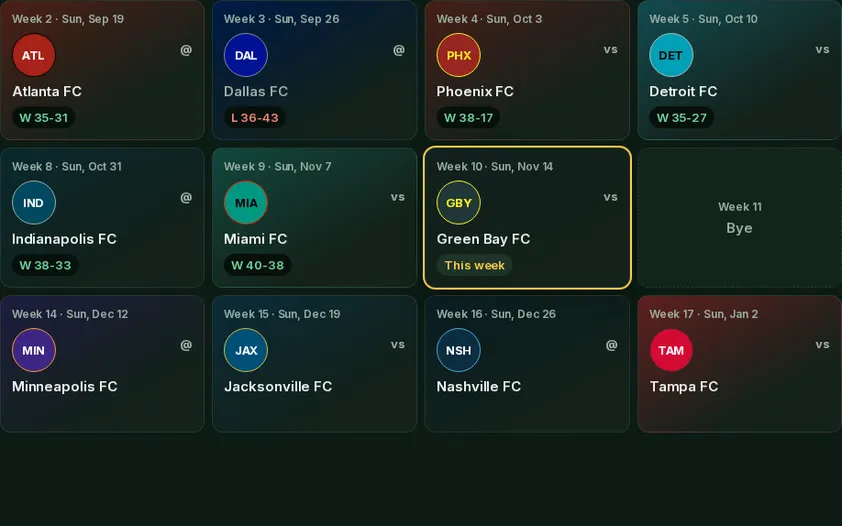
Full pro tiebreaker rules, through to the championship game.
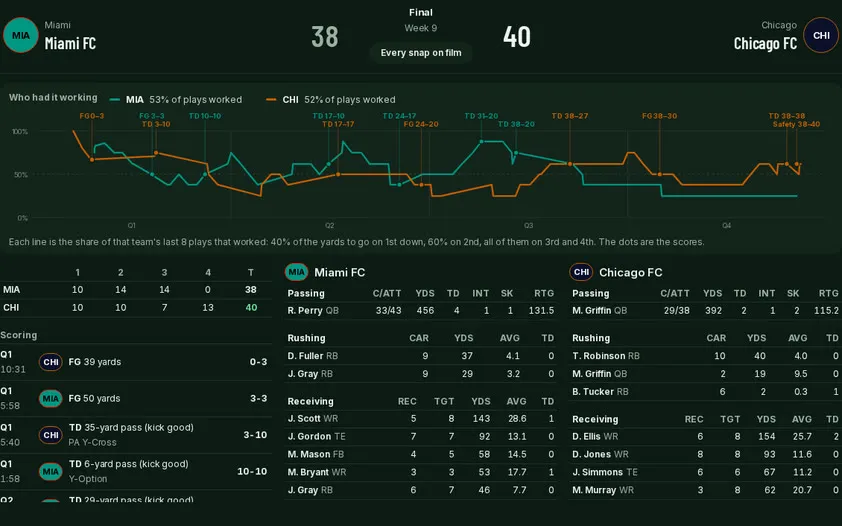
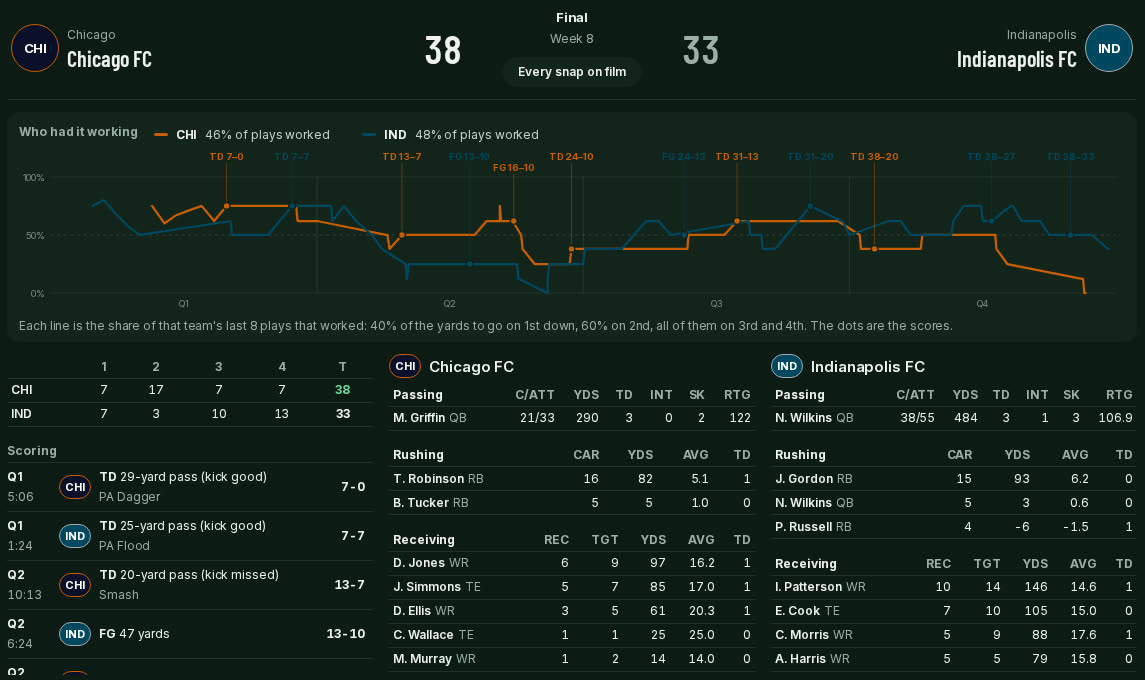
Complete statistics and game film for each game of the season.
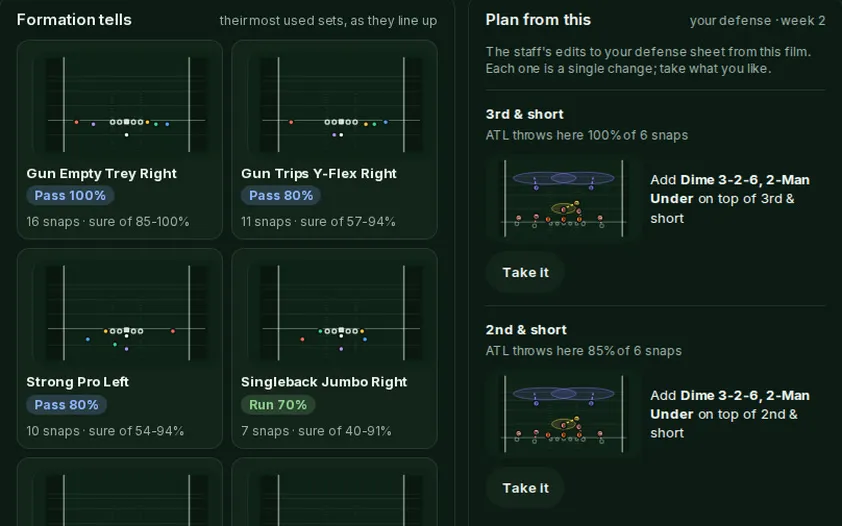
Opponent tendencies by down, distance and personnel, with recommended counters from your staff. Self-scouting reports cover your own tendencies.
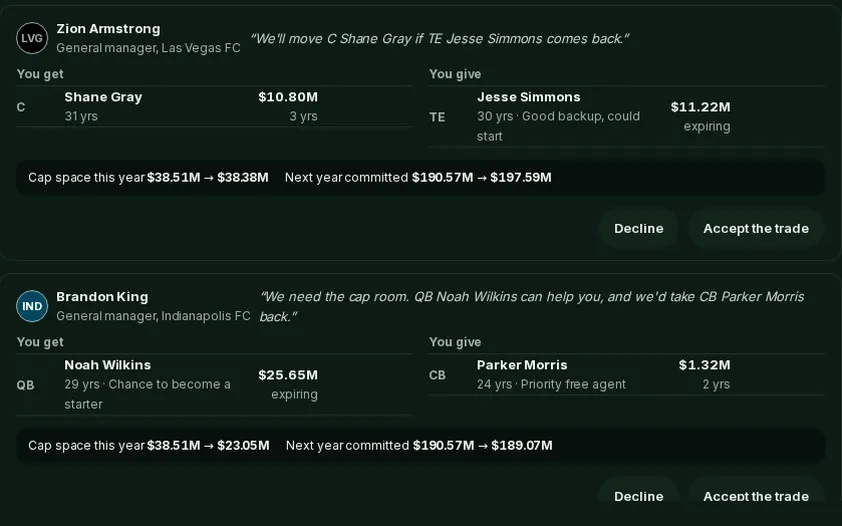
Each AI general manager values players differently. Learn who is open to a deal.
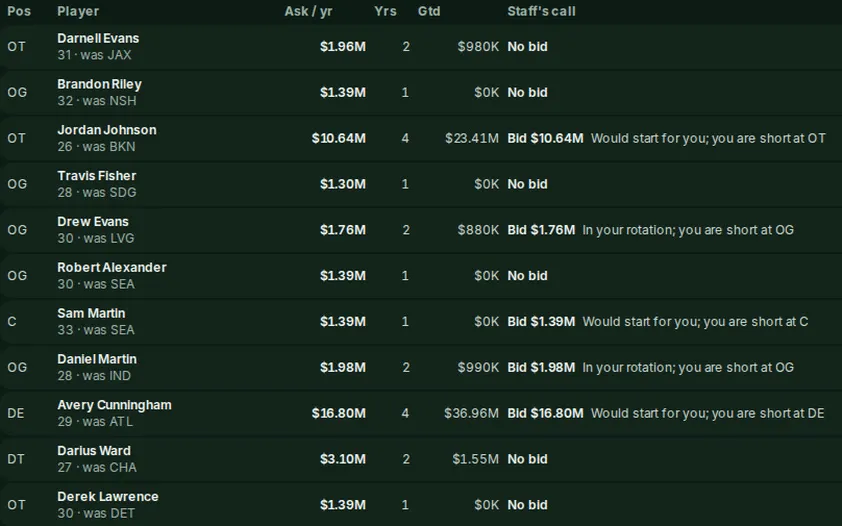
Sign free agents and manage contracts under the salary cap across multiple seasons.
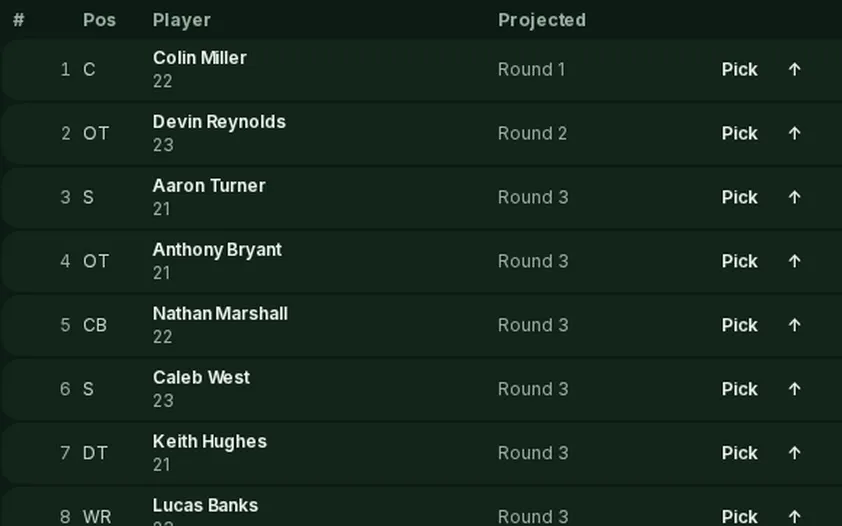
Set your draft board using your scouts' grades, and trade up or down on draft day.
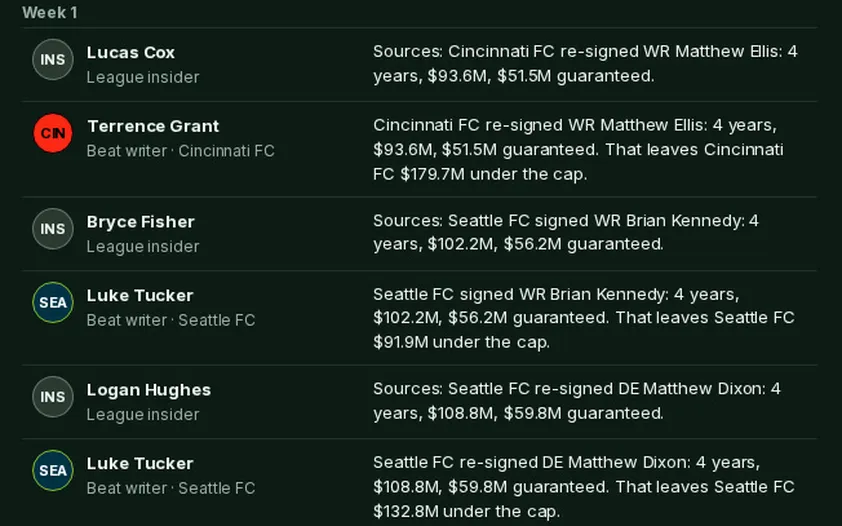
Beat writers, insiders and rival GMs react to your team throughout the season.
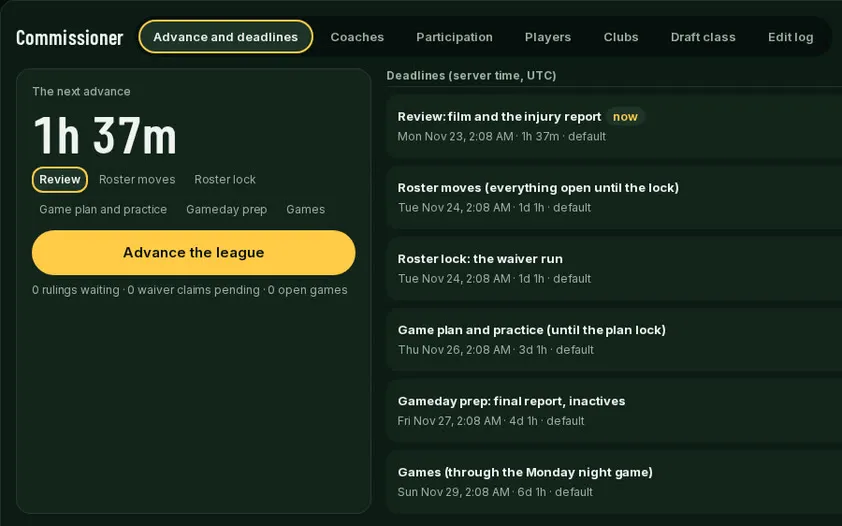
Invite other coaches and manage your league. Each change is logged and visible to all members.
Scout and draft prospects, manage the salary cap, negotiate contracts and trade with AI general managers who each have their own priorities.
Speed, separation and routes, measured on the play you call.